
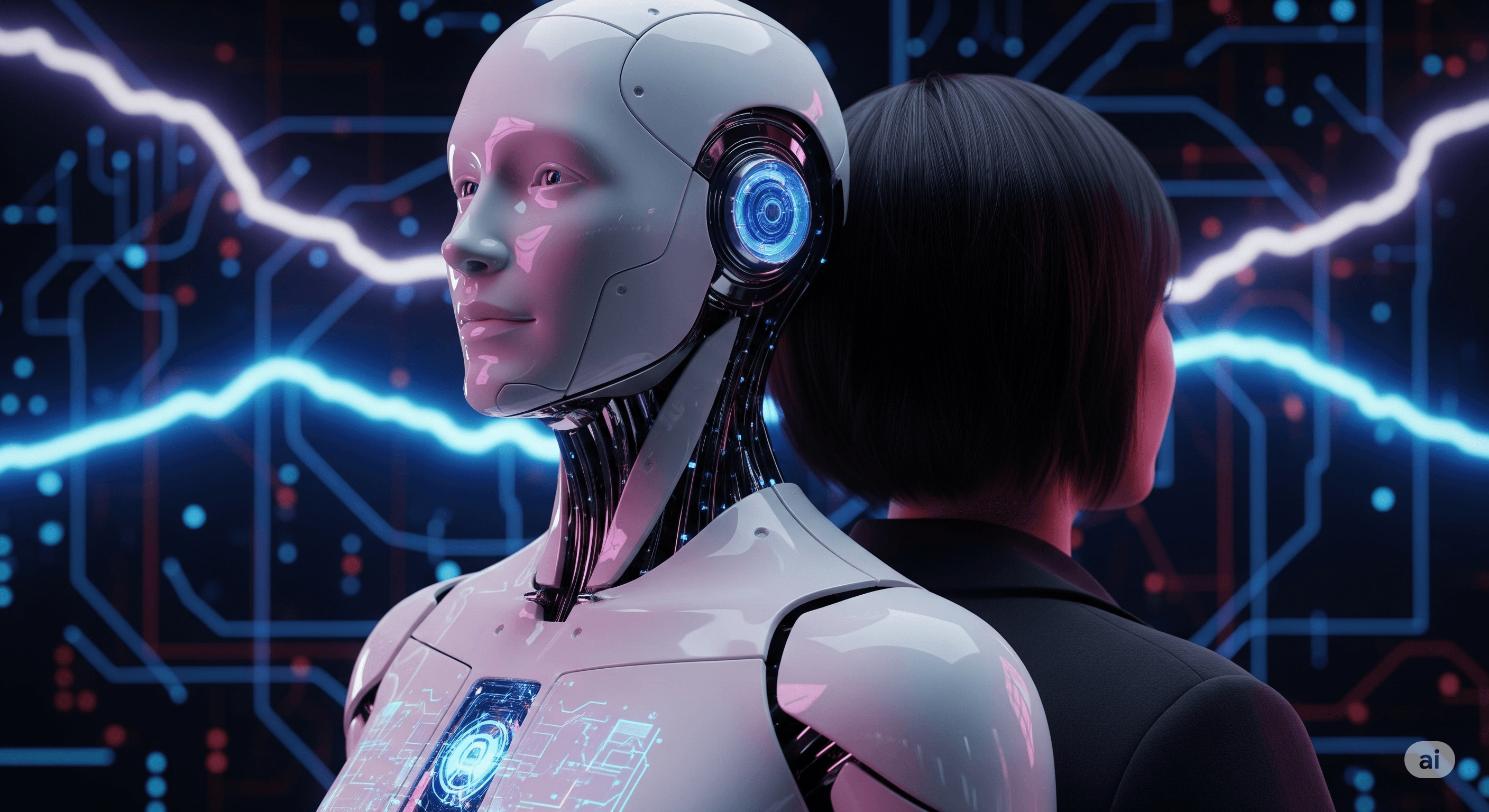
Many large technology companies have recently made similar difficult announcements, including employee layoffs. Thousands of employees from giant companies have lost their jobs in recent years as many businesses have shifted their focus to artificial intelligence, automation, and efficiency-driven operations rather than hiring real humans to perform day-to-day tasks. What was once thought to be a distant possibility has now become a reality, particularly as AI is being used to not only assist industries but also to replace portions of the workforce itself.
AI has demonstrated the ability to complete tasks faster, cheaper, and more efficiently in a variety of fields, including customer service, graphic design, coding, and even data analysis. Companies around the world see this as an opportunity to cut operational costs while maintaining productivity. However, for every efficiency improvement, there is another story and debate about the use of AI in the workplace, such as how it creates uncertainty for employees who are afraid of being replaced.
This shift sparked a global conversation...
While technological advancement has always had an impact on industries, the rapid development of artificial intelligence feels fundamentally different. Machines are no longer just replacing repetitive physical labor; they are also entering spaces previously associated with human elements such as creativity, emotion, and decision-making. In today's world, AI can easily write articles, create artwork, respond to customer complaints, compose music, and accurately imitate human conversation. As a result, many people are beginning to wonder whether human elements in the workplace and across industries are gradually being reduced to a cost comparison.
However, the issue is not with the AI itself
As we know, artificial intelligence is one of the most recent technological advancements in modern history. It has the potential to transform many industries around the world and make people more productive than ever. In many industries, artificial intelligence saves time and removes unnecessary burdens. The issue arises when businesses see AI as a complete replacement for human involvement rather than a complementary tool.
One thing is that efficiency cannot completely replace human qualities. Empathy, emotional intelligence, cultural understanding, and even ethical judgment are qualities that technology cannot accurately replicate. A chatbot may respond to customer questions instantly, but it cannot truly understand frustration in the same way that a human can. Many people also believe that this is where most businesses risk losing something valuable. In their pursuit of automation and optimization, businesses may unintentionally remove the human elements that make brands relatable and communities more meaningful.
Rather than completely replacing humans, AI should be used as a supplement to enhance human abilities. The most sustainable future is one in which humans and AI work together rather than compete with one another. Artificial intelligence can perform repetitive tasks, process large amounts of data, and automate technical functions, allowing humans to focus on strategic thinking, creativity, communication, leadership, and emotional connection. In this model, technology empowers productivity without replacing employees.
The conclusion
As artificial intelligence advances, society must consider an important question: are we developing technology to serve humanity, or are we gradually reshaping humanity to serve technology? The answer may define not only the future of the workplace, but also the future of human connection in general.